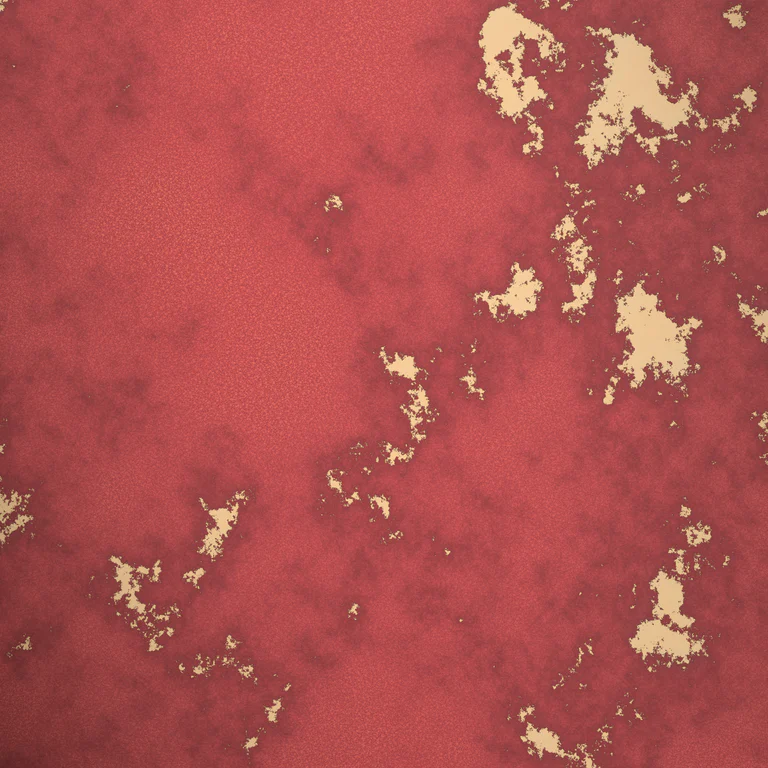
In 2004, I made very large renders with something that was never intended to make pictures at all.
It was a brand new tool called Slim, and it was being developed to create materials for RenderMan. Nobody else had used it … so I got to use it before anyone else did. That was literally my job, to make sure it worked for artists.
Slim was a visual tool for building RenderMan shaders, and a bold idea at the time. Up until then, creating a RenderMan Shading Language shader meant writing code. Slim turned that process into building a node graph. Patterns, noise, colors, displacement and mathematical functions could be connected together visually, then keep feeding the results of one thing into another.
For me, that changed everything. I could code a simple shader … but now I could make ridiculously complicated networks with hundreds of nodes. I could look at a node graph and understand it, and most importantly, I could play with it.
I started building elaborate procedural shaders, piling functions on top of functions and seeing what came out. Slim provided a little shader swatch to show what you’d made.
The little swatch was just a tiny render. So I started screwing with it. I hacked Slim’s initialization file to output much larger images. Eventually I figured out how to spit out a shader swatch at 15,400 × 15,400 pixels.
This was 2004. A 15K image was absurd.
Because these were procedural shaders, new details would emerge, down to the last pixel. And somewhere in the middle of doing this, I had a fairly simple realization:
Wait. I can print these out at large format, and make art.
I stopped trying to make shaders that looked like materials. Instead, I started making shaders whose only purpose was to make interesting abstract images.
Noise became geography. Distortion became erosion. Color ramps became atmosphere. Patterns were fed through other patterns until the original ingredients disappeared.
I wasn’t drawing the final image.
I was building a system and seeing what it made.
That became Rugged Realms.
I printed this series on foam core at 4 ft × 4 ft, and these large-format prints have been shown at SIGGRAPH and other gallery shows.